Skip to content

How to Balance Hormones Naturally: 7 Research-Backed Habits
Is finally feeling better about your PMS, PMDD or period pain on your list? If you have any health goal on your mind, your hormones are a great place to start. They touch almost everything: your mood, energy, sleep, skin and, yes, your cycle.
The good news: the habits that support your hormones aren't complicated or expensive. The less-fun news: there's no magic hack, and anyone selling you one in a 30-second video is, well, selling you something. Here's what the research actually supports.
What does "hormone balance" actually mean?
There's no single ideal number, zone or level that counts as "balanced" for everyone. Every body has its own recipe. When we talk about balanced hormones, we mean the right ratio, timing and interaction of the hormones in your body.
Think of hormones as your body's notification system (ding, you've got mail). They travel through your bloodstream to your tissues and organs and tell them what to do, regulating everything from growth and metabolism to your menstrual cycle. Like magic, but chemicals.
When things are in sync, you feel good and you cannot be stopped. When they're not, sh*t hits the fan and your body has some creative ways of telling you.
Signs your hormones might be out of balance
Hormone imbalances tend to show up uninvited, in ways like:
- Irregular or missing periods
- PMS that disrupts your life
- Headaches around your period
- Breast tenderness
- Unexplained weight gain or loss
- Cystic acne
- Hair loss or thinning
- Fatigue that sleep doesn't fix
- Mood swings, anxiety or brain fog
These signs can have lots of causes, so they're a reason to pay attention, not to diagnose yourself. (More on when to see a doctor at the end.)
What throws hormones off?
Honestly, a better question is what doesn't. Diet, stress, sleep, movement, alcohol and the chemicals in everyday products all play a role. Even getting the flu can delay your period for a cycle. The upside is that a lot of these factors are within your control.
7 research-backed ways to balance your hormones naturally
By "naturally," we mean through lifestyle and nutrition. These habits can work alongside medical treatment, not only instead of it.
1. Eat enough, and eat balanced
Your cycle needs fuel. Under-eating is one of the most common reasons periods go irregular or stop altogether, alongside stress and extreme exercise (Cleveland Clinic). Here's how restricting affects your period.
Build your plate around protein, fiber-rich carbs and healthy fats, plus plenty of colorful vegetables and fruit. In the two weeks before your period, easing up on caffeine, salt and sugar can help with PMS symptoms (Office on Women's Health).
2. Move regularly (and work with your cycle)
Regular aerobic activity throughout the month is one of the standard recommendations for PMS (Office on Women's Health). For period pain, a Cochrane review of 12 trials found exercise cut menstrual pain by about 25 points on a 100-point scale. Most studies used 45 to 60 minutes, at least three times a week, and anything from yoga to Zumba counted (Cochrane, 2019).
You may notice your energy for movement shifts throughout your cycle, and syncing your workouts with it can help. Just don't overdo it: extreme exercise is also on that list of reasons periods go missing.
3. Prioritize sleep
Aim for about eight hours a night (Office on Women's Health). Good sleep hygiene helps: dim the overhead lights and put screens away before bed, and get sunlight in your eyes first thing in the morning.
4. Manage stress
When you're stressed, your body releases cortisol and other stress hormones that can quiet the signals that trigger ovulation. That's why stress can delay your period or make PMS worse. You can't delete stress from your life, but you can give your body regular off-switches: meditation, yoga, a walk without your phone, or support from a therapist or community.
5. Go easier on alcohol
A meta-analysis of 19 studies and more than 47,000 women found that drinking alcohol was linked to a 45% higher risk of PMS, and heavy drinking to a 79% higher risk (Fernández et al., 2018, via ScienceDaily). The researchers couldn't prove alcohol causes PMS (some people may drink to cope with symptoms), but it's a reasonable place to experiment, especially in the week or two before your period.

6. Reduce hormone-disrupting chemicals
Endocrine disruptors are chemicals that can mimic or interfere with your body's hormones (NIEHS). Some of the best-known examples are BPA in plastics, pesticides, and ingredients in some personal care products. The Endocrine Society names female reproduction as one of the areas where the evidence on these chemicals is strongest (Endocrine Society).
You don't need to overhaul your whole house. Start small: store and reheat food in glass instead of plastic, and swap one personal care product at a time for a cleaner option.
7. Fill your nutrition gaps
Food comes first, but specific nutrients have real research behind them for PMS. In a trial of 466 women, taking 1,200 mg of calcium a day cut PMS symptoms by 48% by the third cycle, compared with 30% on placebo (Thys-Jacobs et al., 1998). Calcium, vitamin B6 and magnesium all have research support for PMS (Office on Women's Health).
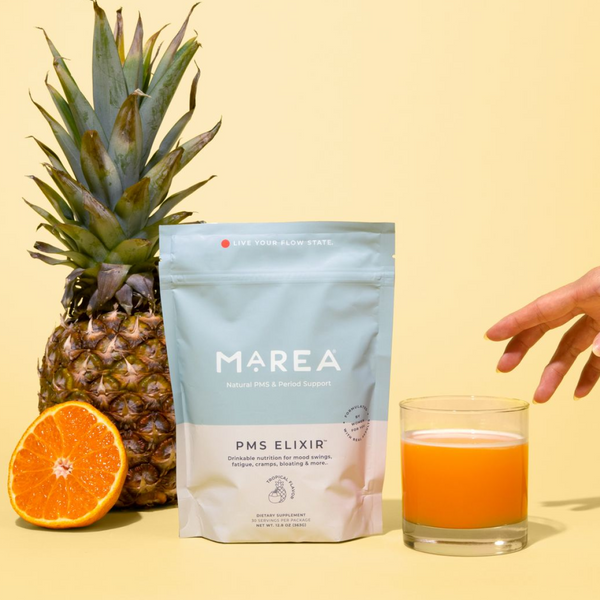
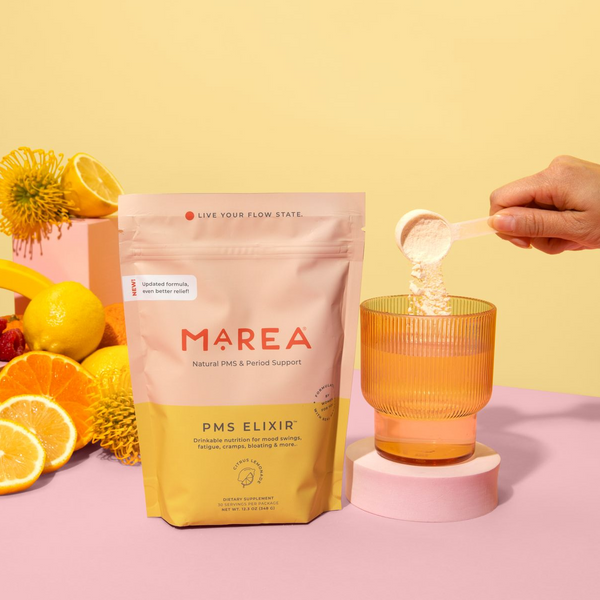
If you'd rather not juggle a cabinet full of bottles, the PMS Elixir packs 15 essential vitamins and minerals for hormone and period support into one drink a day.
[PMS Elixir banner image with alt text: "Marea PMS Elixir drinkable multivitamin"]
How to tell if it's working
Track your cycle and symptoms for at least three cycles. Hormone changes take time, and one month doesn't show you a pattern. Our free period symptom tracker makes it easy to spot what's shifting.
When to see a doctor
Lifestyle changes are powerful, but they're not a substitute for a diagnosis. Talk to your doctor if:
- You miss three periods in a row (Cleveland Clinic)
- You suspect a condition like PCOS, thyroid issues or endometriosis
- You're having trouble getting pregnant
- Your PMS symptoms are severe enough to disrupt your work, relationships or mental health, which may point to PMDD
Your hormones are always talking to you. These habits are how you start listening.
Sources
- Office on Women's Health. Premenstrual syndrome (PMS).
- Armour M, et al. (2019). Exercise for dysmenorrhoea. Cochrane Database of Systematic Reviews.
- Fernández MM, et al. (2018). Premenstrual syndrome and alcohol consumption: a systematic review and meta-analysis. BMJ Open. Summary via ScienceDaily.
- Thys-Jacobs S, et al. (1998). Calcium carbonate and the premenstrual syndrome. American Journal of Obstetrics & Gynecology.
- NIEHS. Endocrine disruptors.
- Endocrine Society. EDC-2: Second scientific statement on endocrine-disrupting chemicals.
- Cleveland Clinic. Amenorrhea.
- Vigil P, et al. (2022). Chronic stress and ovulatory dysfunction. Frontiers in Global Women's Health. This supports the stress-and-ovulation line. Consider linking it in step 4.